

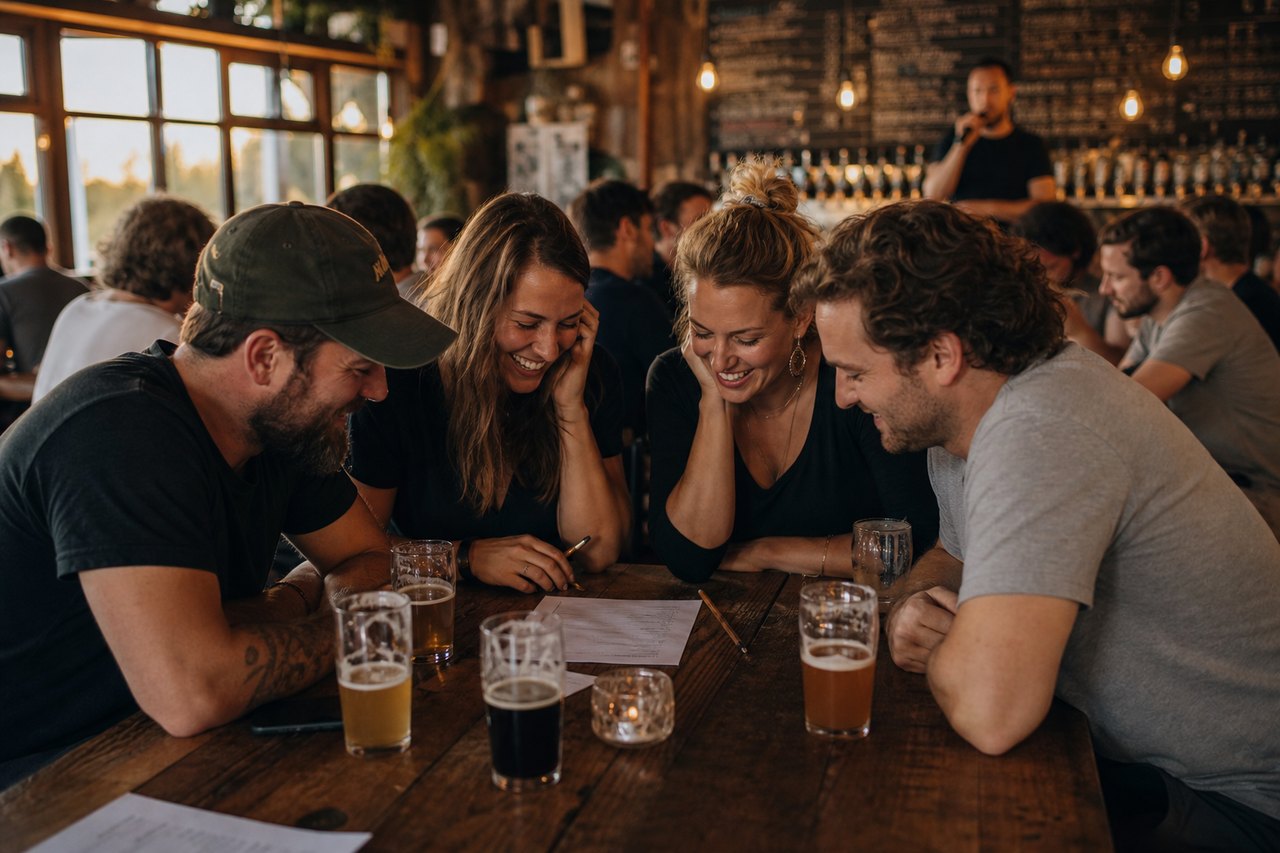
Between streaming services, food delivery apps, and the constant pull of whatever’s on your phone, you’d think the traditional Kiwi pub would be in real trouble. Mostly it isn’t. Brew bars across New Zealand are doing fine, and a decent number are doing better than fine. From Auckland’s harbourside taprooms down to the heritage breweries in Dunedin, the local has quietly rebuilt itself for a generation that has more options on a Friday night than it really knows what to do with. So why do people still walk down to the local when so much is sitting right there on the couch? Most of it comes back to one thing: what a brew bar gives you that a screen can’t.
What Screens Cannot Replicate
Some things just have to happen in person. A fresh-hop pilsner poured properly. The buzz of a beer garden on a long summer evening. The two-minute chat with the brewer about what’s on tap this week and what’s coming next month. That sensory, social side of hospitality is what most NZ brew bars have built their whole offer around. The programming reflects it. Weekly trivia, live music, brewers’ table dinners, beer-and-cheese nights. Regulars don’t show up because the beer is cheap. They show up because there’s usually something on. The same room can be a community hub on a Tuesday, a date-night spot on a Friday and a long family lunch on a Sunday, which is genuinely difficult to match from the sofa.
Food Has Caught Up With the Beer
The old joke about pub food being an afterthought doesn’t really apply anymore. Garage Project in Wellington, Sawmill up in Matakana, Emerson’s in Dunedin: these places have kitchens that take the food as seriously as the beer. Local lamb. Fresh seafood from waters not far away. Sourdough from a bakery a few doors down. The farm-to-table idea quietly took root in the brew bar scene without ever needing to be called that. Beer pairings have become a draw in their own right. A West Coast IPA with spiced fried chicken. A milk stout with sticky date pudding. A crisp lager with green-lipped mussels and shoestring fries. The good versions turn a casual pint into something you actually book a table for.
When Some Leisure Moves Online
That said, not every form of pub-adjacent entertainment has stayed inside the venue. Pokies in particular have a strong digital twin. New Zealand’s online casino market is currently being formalised under the Online Casino Gambling Act 2026, which caps the number of licensed operators at fifteen and brings in stricter consumer protections, including a ban on credit card deposits and a mandatory registration mark on approved sites. With the full transition due by December 2026, the rules are shifting fast, and this legal overview of online casinos in New Zealand is a useful place to read up on how licensing works and what separates an authorised operator from an offshore one. This shift hasn’t emptied out the pubs, though. If anything, it’s clarified what brew bars actually offer: not just gaming or a drink, but a place to be among other people. Online platforms handle the solo-entertainment side of things neatly; brew bars handle the social side. The two coexist far more than they compete.
Regional Character Still Matters
The other thing that keeps NZ brew bars distinctive is that no two of them are doing quite the same thing. Wellington still wears the craft beer capital crown, helped along by Fork & Brewer’s forty-tap range and whatever experimental small-batch Garage Project has put out that week. Marlborough’s tasting rooms borrow some of the wine country attitude. Queenstown leans into a steady rotation of visitors coming off the slopes. Even smaller places like Matakana and Greytown have built a chunk of their weekend tourism around a local brewery with a kitchen worth driving for. For travellers, that ends up being half the fun. You aren’t really just having a beer. You’re getting a quick read on what the hop growers, fishermen and butchers in that particular pocket of the country have been up to.
Conclusion: The Local Still Wins
The pressure on hospitality is real. Costs are up, younger Kiwis are drinking less than the generation before them, and there’s more competition for the same leisure dollar. But the brew bars that have built around community, decent food, and a strong sense of where they are tend to keep going. The ones in trouble are usually the ones still trying to be all things to all people. So next time the choice is between another evening in front of the TV and a short walk to the local taproom, the local still tends to win the argument. The beer is fresher, the people are usually more interesting, and nothing on the wall is queueing up the next thing for you.